B3 Beethoven’s Third Piano Concerto
An evening where the present meets musical tradition. The program features a work by Czech composer Martin Klusák, Beethoven’s Third Piano Concerto — full of power and emotion — and Krzysztof Penderecki’s Fourth Symphony “Adagio”, which blends a modern musical language with the legacy of great symphonic traditions.
The composition Lignis by Martin Klusák will be performed in its Czech premiere and is financially supported by the Czech Performing Rights Society (OSA).

PROGRAM
Martin Klusák
Lignis 8´
Ludwig van Beethoven
Piano Concerto No. 3 in C minor, Op. 37 35´
Allegro con brio
Largo
Rondo: Allegro
/Intermission/
Krzysztof Penderecki
Symphony No. 4 “Adagio” 30´
Adagio
Più animato
Tempo I
Allegro
Tempo II
PERFORMERS
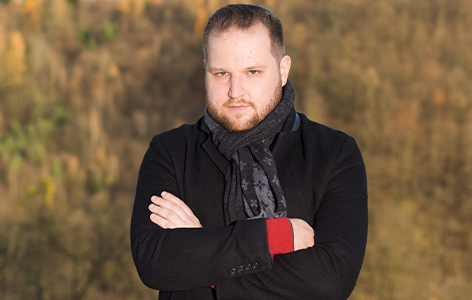
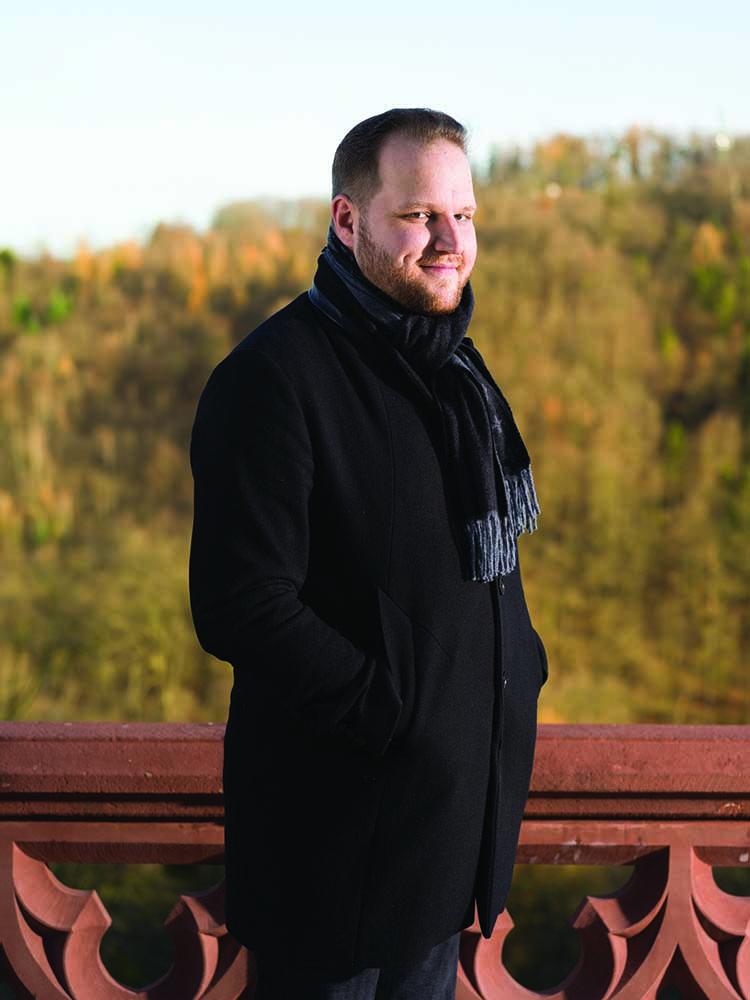
Lukáš Vondráček – piano
Janáček Philharmonic Ostrava
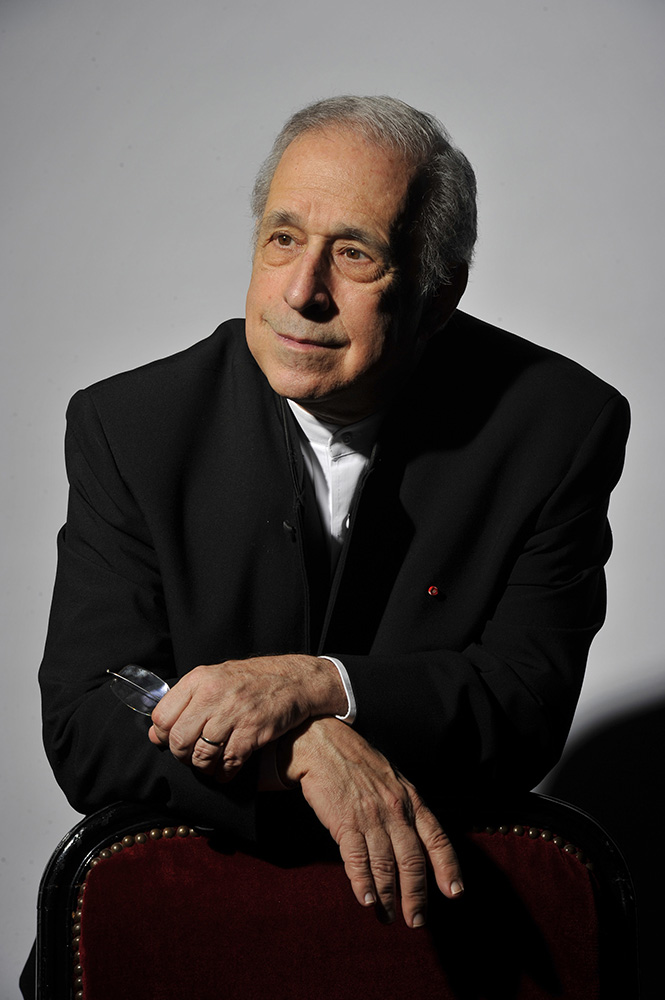
Lawrence Foster – conductor
Prague-born *Martin Klusák (1987) still belongs to the younger generation of Czech composers. His work is characterized primarily by various forms of experimentation and intermediality that often transcends the boundaries of music itself, frequently appearing in film, specific audiovisual projects, or computer games. Since 2013, his compositions have been regularly performed by Orchestr Berg, and he has also collaborated with other prominent Czech ensembles and festivals such as the Prague Philharmonic Choir, Pardubice Chamber Philharmonic, Prague Spring Festival, Janáček May, among others.
Klusák has also achieved notable success abroad, including overseas, where he has repeatedly received awards. He studied sound design at FAMU and composition at HAMU. Since 2022 he has been teaching at the Academy of Performing Arts in Prague, where he lectures on Film Music, Music Programming, History of Acoustic Arts, and Fundamentals of Audiovisual Technology. He also works as a music producer at Czech Radio.
Klusák’s composition Lignis was commissioned by the Janáček Philharmonic Ostrava, which gave its world premiere at the 13th edition of the Emanacje Festival held at the Krzysztof Penderecki European Centre for Music—a highly modern music centre in the Polish town of Lusławice, dedicated primarily to young musicians from around the world.
The composer himself described his experimental work, heard tonight in its Czech premiere, as follows:
“The course of the composition may metaphorically resemble looking at a large oak tree from its crown down to its roots. In the first part we hear the rustling of the thinnest branches and leaves, birds singing; gradually our gaze moves down to the stronger branches, then to the main trunk, and finally our sight comes to rest at the ground, at the roots beneath the earth.
The instrumentation of the composition is inspired by organ registers and makes extensive use of combinations of woodwinds, higher brass instruments, and melodic percussion. The strings play a more supportive role, quietly sustaining tones emphasized by the other instruments.
During the course of the piece a large cluster gradually accumulates in the strings, which halfway through the composition may resemble a majestic organ chord. At a crucial moment this chord is slightly detuned—as if the air pressure in the organ pipes had been subtly increased and the entire sound gradually shifted into a different tuning and unusual intonational relationships. Figuratively speaking, it is as if the powerful, living ‘trunk of the tree’ began to move slightly by itself, imperceptible to the human eye.”
Ludwig van Beethoven (1770–1827), the culminating figure of Viennese Classicism, began composing his Piano Concerto No. 3 in C minor, Op. 37 during a time of deep personal crisis. Four years earlier he had been diagnosed with a hearing disorder, and his health problems continued to worsen. These difficulties eventually prevented him from actively or passively participating in concert life and made social life increasingly difficult.
The verdict of the doctors was clear: the illness was incurable and would sooner or later lead to total hearing loss. Such a prognosis is devastating for anyone; for a musician it is an outright tragedy.
In October 1802 Beethoven wrote a highly emotional letter to his brothers, concluding with the words:
“It is finished—joyfully I hasten to meet death. If it comes before I have had the opportunity to develop all my artistic abilities, it will still come too soon despite my cruel fate, and yet I would wish it later. But even then I shall be content—will it not free me from my endless suffering?”
Fortunately for the composer, death came only twenty-five years later. Beethoven courageously endured his deafness and learned to live and create with it. The letter to his brothers became known in history as the Heiligenstadt Testament, named after the village where Beethoven was staying at the time.
Shortly thereafter he completed his Third Piano Concerto. Of Beethoven’s five piano concertos, it is the only one written in a minor key. The work has a logical structure reminiscent of a symphony, and its solo part avoids empty virtuosity.
The long orchestral introduction—occupying nearly a quarter of the first movement Allegro con brio—bears the typical marks of Beethovenian heroism. The piano then introduces a contrasting lyrical theme. In the further course of this sonata-form movement, the piano engages in dialogue with the various instrumental groups of the orchestra, exchanging striking motifs. The solo cadenza, filled with rapid runs and trills in the upper register, leads into a reprise of the opening lyrical theme, and the first movement ends much as it began—firmly, resolutely, and with pathos.
The dreamy Largo is introduced by the solo piano. At times it resembles a triple-time dance and, in contrast to the first movement, conveys a sense of calm and reconciliation. The playful mood of the final Rondo (Allegro) and the overall optimistic conclusion of the concerto give no indication that its composer was experiencing one of the most difficult periods of his life. In this, among other things, lies the extraordinary strength of Beethoven’s personality and music.
The world premiere of the Third Piano Concerto took place on 5 April 1803 at the Theater an der Wien, with Beethoven himself at the piano. The evening also featured other recent works by the composer: the Second Symphony and the oratorio Christ on the Mount of Olives.
Krzysztof Penderecki (1933–2020), who passed away six years ago, ranks alongside Witold Lutosławski and Henryk Górecki among the leading composers of the Polish avant-garde of the 20th century.
Penderecki studied composition at the Academy of Music in Kraków, where he later remained as a teacher and served as rector from 1972 to 1987. He came to wider attention in 1959, when he won the first three prizes in a competition organized by the Polish Composers’ Union.
From the 1970s onward he also became active as a conductor, specializing particularly in the works of Dmitri Shostakovich and his own compositions.
As a composer, Penderecki employed a wide variety of expressive means. His work encompasses electroacoustic music, atonality, serialism, and aleatoric techniques, and he experimented with sound colour and extended instrumental techniques. He also used graphic scores, while often drawing inspiration from forms of early music.
Many of his works contain a strong spiritual dimension, often addressing themes of humanity, war, and freedom. Among his best-known compositions are the work for 52 string instruments Threnody to the Victims of Hiroshima, eight symphonies, instrumental concertos, and the operas Paradise Lost, The Black Mask, and Ubu Rex. He also wrote numerous sacred works, including St Luke Passion, Polish Requiem, Stabat Mater, and Te Deum, which he dedicated to Pope John Paul II.
His Symphony No. 4, often referred to as Adagio due to its prevailing tempo and overall meditative character, dates from 1989, a year when Poland was experiencing profound political upheaval culminating in the fall of the communist regime. By the time of the premiere on 29 November 1989, that regime had already collapsed.
In this work Penderecki once again engages in dialogue with the Romantic symphonic tradition, conceiving the piece as a concertante symphony with frequent solos and dialogues between individual instruments rather than full orchestral tuttis.
Although the symphony is formally divided into five movements, their boundaries are difficult to distinguish without consulting the score. The sections follow one another seamlessly, creating a continuous musical flow.
Petr Ch. Kalina
During a career spanning more than two decades, Lukáš Vondráček, the Grand Prix winner of the 2016 Queen Elisabeth International Piano Competition, has travelled the world performing with leading orchestras such as the Philadelphia Orchestra, Boston Symphony, Cleveland Orchestra, Chicago Symphony, Baltimore Symphony, Los Angeles Philharmonic, Sydney Symphony, West Australian Symphony, Tokyo Metropolitan Symphony, Czech Philharmonic, Warsaw Philharmonic, Frankfurt Radio Symphony, Dresden Philharmonic, Bamberg Symphony, Lucerne Symphony Orchestra, Philharmonia Orchestra, London Symphony Orchestra, and Oslo Philharmonic.
He frequently collaborates with conductors including Jakub Hrůša, Paavo Järvi, Gianandrea Noseda, Yannick Nézet-Séguin, Christoph Eschenbach, Klaus Mäkelä, Michael Tilson Thomas, Giancarlo Guerrero, Manfred Honeck, Xian Zhang, Pietari Inkinen, Vasily Petrenko, Stéphane Denève, and Marin Alsop, among many others.
His recital appearances include Elbphilharmonie Hamburg, Flagey in Brussels, the Gewandhaus in Leipzig, Vienna Konzerthaus, the Concertgebouw in Amsterdam, and major festivals such as the Menuhin Festival Gstaad, Edinburgh International Festival, Chopin and His Europe, Le Piano Symphonique at KKL, PianoEspoo, Prague Spring, and the Lille Piano Festival.
Highlights of the 2025/26 season include performances with the Toronto Symphony Orchestra under Elim Chan, the Belgian National Orchestra under Antony Hermus, the Brussels Philharmonic under Kazushi Ono, the Polish National Radio Symphony Orchestra under Marin Alsop, and the West Australian Symphony Orchestra under Asher Fisch, where he performs the complete cycle of Beethoven’s piano concertos. Additional collaborations this season include the Malmö Opera Orchestra, RTV Slovenia Symphony Orchestra, Romanian National Radio Orchestra, and the Janáček Philharmonic Ostrava.
His recital engagements this season include a return to Carnegie Hall (Zankel Hall) in New York.
Vondráček first appeared in public at the age of four, and at fifteen made his debut with the Czech Philharmonic under Vladimir Ashkenazy, followed by a major tour of the United States in 2003. His natural musicality, self-confidence, and remarkable technique have long distinguished him as a mature and accomplished artist.
He gained worldwide recognition through numerous international awards, including first prizes at the Hilton Head, San Marino, and UNISA International Piano Competitions, as well as the Raymond E. Buck Jury Discretionary Award at the Van Cliburn Competition in 2009.
He received an Artist Diploma from the New England Conservatory in Boston, graduating with honours in 2012 under Hung-Kuan Chen.
Lawrence Foster is renowned for his compelling and expressive performances across a wide range of repertoire and enjoys a distinguished international career spanning the United States, Europe, and Asia.
Widely regarded as one of the foremost interpreters of George Enescu’s music, he is celebrated for his fidelity to the score and deep artistic commitment:
“Lawrence Foster seems to have been sent to this planet to conduct Enescu’s music. He understands every technical nuance and every expressive turn.” — The Telegraph
In the 2025/26 season, he conducts engagements including the London Philharmonic Orchestra with Evgeny Kissin, the Royal Liverpool Philharmonic, the George Enescu Philharmonic in Bucharest, the NCPA Orchestra in China, and a tour of Poland with the Janáček Philharmonic Ostrava, among others.
He also returns to the Polish National Radio Symphony Orchestra, the Marseille Philharmonic Orchestra, and the Monte-Carlo Philharmonic Orchestra.
Following his tenure as Music Director of the Opéra de Marseille and Artistic Director and Chief Conductor of the Polish National Radio Symphony Orchestra, he remains highly sought after for both opera and symphonic repertoire.
In 1966, Foster received the Koussevitzky Prize at Tanglewood, became assistant conductor to Zubin Mehta at the Los Angeles Philharmonic, and in 1969 was appointed Principal Guest Conductor of the Royal Philharmonic Orchestra. Since then he has held leading positions with orchestras including the Houston Symphony, Orchestre Philharmonique de Monte-Carlo, Orchestre de Chambre de Lausanne, Orquestra Simfònica de Barcelona i Nacional de Catalunya, Gulbenkian Orchestra, Orchestre Philharmonique de Montpellier, and the Aspen Music Festival and School.
He is particularly admired as an interpreter of George Enescu’s works and has conducted an extensive survey of commercial recordings of Enescu’s music. Between 1998 and 2001, he served as Artistic Director of the George Enescu Festival, reopening this major cultural event in Romania after the fall of communism.
In 2023, he was awarded the Romanian National Order of Merit for his contributions to Romanian culture and the promotion of Enescu’s music.
With an extensive and distinguished discography, Foster has established himself as one of today’s most prominent conductors. His recording of Enescu’s opera Oedipe (EMI) received the Grand Prix du Disque from the Académie Charles Cros in France.
In recent years he has recorded extensively for Pentatone, including Schumann’s symphonies, orchestral works by Kodály, Bartók, and Ligeti, and concertos by Bruch, Korngold, Rachmaninoff, Grieg, and Chopin with leading soloists. His opera recordings for Pentatone include Otello, Madama Butterfly, Die Fledermaus, and La fanciulla del West.

Made by