H2 Vondráček Plays Beethoven
The concert opens with Smetana’s Vltava, a symphonic poem that masterfully portrays the natural beauty and historical significance of the Czech river. It will be followed by Beethoven’s Third Piano Concerto, an early work that combines brilliant piano virtuosity with heroic themes that would later reappear in his Eroica.
PROGRAM
Bedřich Smetana
The Moldau (Vltava), symphonic poem from the cycle Má vlast – 12´
Ludwig van Beethoven
Piano Concerto No. 3 in C minor, Op. 37 – 35´
Allegro con brio
Largo
Rondo: Allegro
PERFORMERS
Lukáš Vondráček – piano
Janáček Philharmonic Ostrava
Lawrence Foster – conductor
The cycle of six symphonic poems Má vlast (1874–1879), together with the opera Libuše (1872), ranks among the supreme symbols of Czech music. Their composer, Bedřich Smetana (1824–1884), drew inspiration for these works from themes that resonated strongly with the Czech public in the second half of the nineteenth century and played a symbolic role in shaping Czech national consciousness and later in the formation of Czech statehood.
In Má vlast we encounter three levels of national symbolism. The first is a mythological level, most clearly expressed in the symphonic poems Vyšehrad and Šárka. The second level celebrates the beauty of the Czech landscape, as heard in The Moldau and From Bohemia’s Woods and Fields. The third level presents historical and political motifs that appear in the concluding symphonic poems Tábor and Blaník.
In choosing the form of the work, Smetana was inspired by the music of the Hungarian-German composer Franz Liszt, whom we regard as the “inventor” of the symphonic poem. Liszt and his followers understood this innovative form as a single-movement orchestral composition following a predetermined programme; such a work depicts a story, a natural scene, or a human emotional state using musical means of expression.
Smetana met Liszt in Prague in 1856 and maintained friendly relations with him thereafter. That same year, the Czech composer moved to Göteborg in Sweden, where he composed his first symphonic poems: Richard III (1858), Wallenstein’s Camp (1858), and Hakon Jarl (1860).
However, Smetana’s approach to the extra-musical content of symphonic poems differed somewhat from Liszt’s. Before composing, Liszt formulated a detailed verbal programme intended to be presented to the audience before the music itself. These extra-musical connections therefore guided listeners precisely along the path the composer had followed while writing the work.
Smetana, by contrast, never verbally formulated his programme before composing. Often he merely provided the piece with a non-musical title, thereby allowing listeners greater freedom for their own imagination.
The idea of writing the first two parts of Má vlast arose two years before Smetana lost his hearing, in 1872, when he was composing Libuše. He conceived both pieces as an inseparable pair with strong musical and narrative connections. Vyšehrad and The Moldau were completed in 1874.
About the part inspired by the Czech river, which will be heard in today’s concert, he wrote:
“The composition depicts the course of the Vltava, beginning with its two small springs, the cold and the warm Vltava (the composer apparently expressed them in the reverse order), their joining into a single stream, then the river flowing through groves and meadows where a joyous village festival is being celebrated; in the moonlit night the dance of the water nymphs; on nearby rocks rise proud castles, palaces and ruins; the Vltava swirls in the currents of St. John’s Rapids; it flows broadly onward toward Prague, Vyšehrad appears, and finally the river disappears in the distance in its majestic course toward the Elbe.”
As we can see, Smetana himself revealed relatively little about his extra-musical inspirations. Nevertheless, it is clear that he followed much more concrete visual ideas while composing. The detailed programme analyses of Má vlast that we know today are mostly the result of subjective interpretations by later commentators and probably do not fully reflect the composer’s original intention. They arose largely under pressure from publishers and audiences who demanded precise explanations of the work’s content.
Formally, The Moldau is often described as a large rondo with a dance-like intermezzo (a polka during the village celebration), while the first half of the recurring “refrain” is a minor-key version of the folk song Kočka leze dírou (“The Cat Crawls Through the Hole”).
Ludwig van Beethoven (1770–1827), the culminating figure of musical Classicism, began composing his Piano Concerto No. 3 in C minor, Op. 37 during a period of deep personal crisis. Four years earlier he had been diagnosed with a hearing disorder, and his condition continued to deteriorate.
These problems eventually prevented him from actively or passively participating in concert life and made social interaction extremely difficult. The doctors’ verdict was clear: the illness was incurable and would sooner or later lead to total deafness. Such a verdict is devastating for anyone; for a musician it is a tragedy.
In October 1802 Beethoven wrote an extremely emotional letter to his brothers, concluding with the words:
“It is finished – with joy I hasten to meet death. If it comes before I have had the chance to develop all my artistic capacities, it will come too soon despite my cruel fate, and yet I would wish it later. But even then I shall be content: will it not free me from my endless suffering? Come then, death, whenever you will – I shall meet you bravely. Farewell and do not forget me entirely when I am dead. I have deserved this from you, for in my life I often thought of you so as to make you happy; so be it!”
Fortunately, death came for the composer only twenty-five years later. He bore his deafness courageously and learned to live and create despite it. The letter to his brothers entered history as the Heiligenstadt Testament, named after the village where Beethoven was staying at the time.
Shortly afterwards he completed his Third Piano Concerto. Among Beethoven’s five piano concertos, this is the only one written in a minor key. The work has a logical structure reminiscent of a symphony, and its solo part avoids empty virtuosity.
The long orchestral introduction, occupying nearly a quarter of the first movement Allegro con brio, bears the typical hallmarks of Beethovenian heroism. The solo instrument then presents a contrasting lyrical theme. In the course of this sonata-form movement, the piano engages in dialogue with various orchestral groups through the exchange of forceful motifs.
The solo cadenza, filled with rapid runs and trills in the upper register, leads to a reprise of the opening lyrical theme, and the movement ends much as it began – resolutely, determinedly and with pathos.
The dreamy second movement Largo begins with the solo instrument. At times it takes on the character of a triple-meter dance and, in contrast to the first movement, sounds balanced and reconciled.
The playful mood of the final rondo (Allegro) and the overall optimistic conclusion of the concerto give no indication that the composer was experiencing one of the most difficult periods of his life. This contrast itself reflects the extraordinary strength of Beethoven’s personality and music.
The world premiere of the Third Piano Concerto took place on 5 April 1803 at the Theater an der Wien with the composer at the piano. The evening also included other new Beethoven works – the Second Symphony and the oratorio Christ on the Mount of Olives.
Petr Ch. Kalina
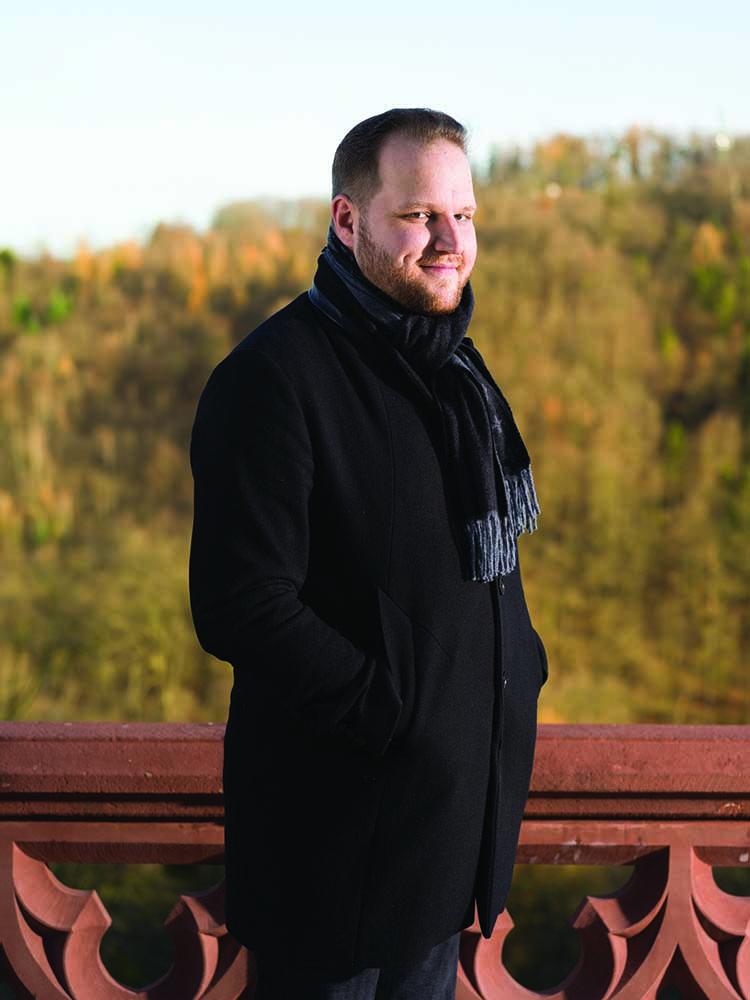
During his more than two-decade career, Lukáš Vondráček, the undisputed Grand Prix winner of the 2016 Queen Elisabeth International Piano Competition, has travelled the world and performed with leading orchestras such as the Philadelphia Orchestra, Boston Symphony, Cleveland Orchestra, Chicago Symphony, Baltimore Symphony, Los Angeles Philharmonic, Sydney Symphony, West Australian Symphony, Tokyo Metropolitan Symphony, Czech Philharmonic, Warsaw Philharmonic, Frankfurt Radio Symphony, Dresden Philharmonic, Bamberg Symphony, Lucerne Symphony Orchestra, Philharmonia Orchestra, London Symphony Orchestra and Oslo Philharmonic.
He frequently collaborates with conductors including Jakub Hrůša, Paavo Järvi, Gianandrea Noseda, Yannick Nézet-Séguin, Christoph Eschenbach, Klaus Mäkelä, Michael Tilson Thomas, Giancarlo Guerrero, Manfred Honeck, Xian Zhang, Pietari Inkinen, Vasily Petrenko, Stéphane Denève, Marin Alsop and many others.
As a recitalist he has appeared at Hamburg’s Elbphilharmonie, Brussels’ Flagey, Leipzig’s Gewandhaus, Vienna’s Konzerthaus, Amsterdam’s Concertgebouw and at renowned festivals such as the Menuhin Festival Gstaad, the Edinburgh International Festival, Chopin and His Europe, Le Piano Symphonique at KKL, PianoEspoo in Finland, the Prague Spring Festival and the Lille Piano Festival.
Highlights of the 2025/26 season include collaborations with the Toronto Symphony Orchestra under Elim Chan, the Belgian National Orchestra under Antony Hermus, Brussels Philharmonic under Kazushi Ono, the Polish National Radio Symphony Orchestra with Marin Alsop and the West Australian Symphony Orchestra with Asher Fisch, where he performs the complete cycle of Beethoven’s piano concertos. Other orchestral engagements this season include the Malmö Opera Orchestra, the RTVE Symphony Orchestra, the Romanian National Radio Orchestra and the Janáček Philharmonic Ostrava. His recital appearances include a return to Carnegie Hall (Zankel Hall) in New York.
He gave his first public performance at the age of four, and at fifteen made his debut with the Czech Philharmonic and Vladimir Ashkenazy in 2002, followed by a major U.S. tour in 2003. His natural and confident musicality and remarkable technique have long distinguished this gifted and mature musician.
Vondráček has achieved worldwide recognition through numerous international awards, including first prizes at the Hilton Head and San Marino international piano competitions and the UNISA International Piano Competition in Pretoria, South Africa, as well as the Raymond E. Buck Jury Discretionary Award at the Van Cliburn International Piano Competition in 2009. He received an Artist Diploma from the New England Conservatory in Boston under Hung-Kuan Chen, graduating with honours in 2012.
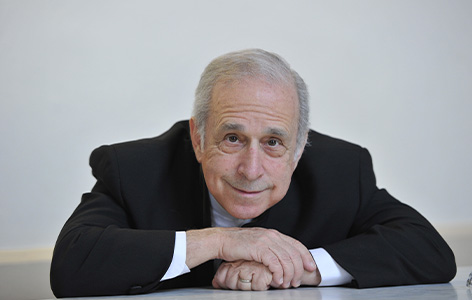
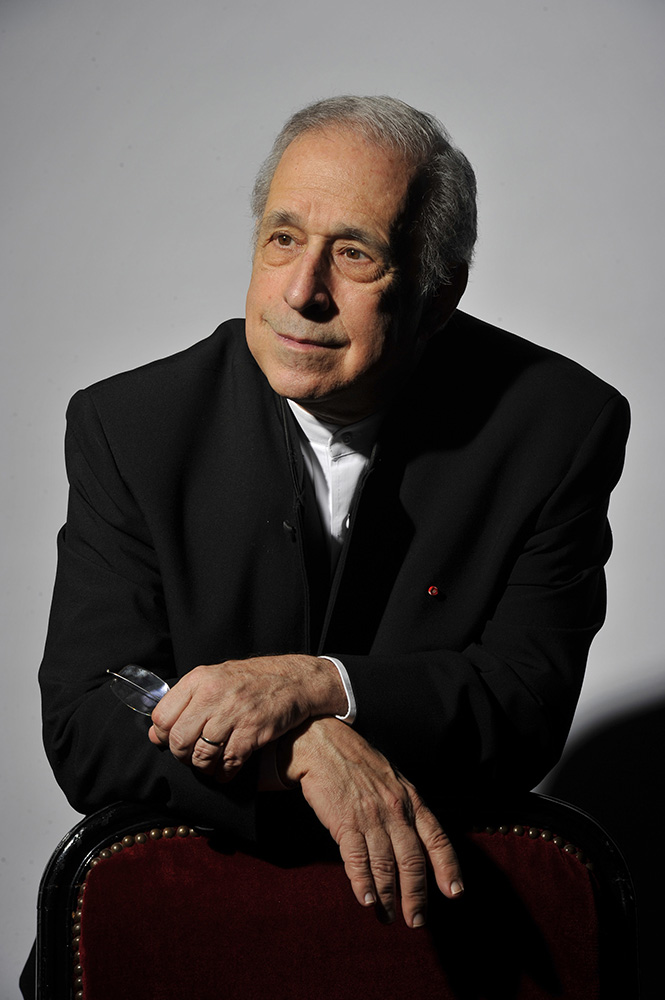
Lawrence Foster is renowned for his compelling and expressive performances across a wide range of repertoire and enjoys a distinguished international career spanning the United States, Europe and Asia. Recognised as one of the foremost interpreters of George Enescu’s music, he is praised for his fidelity to the score and deep artistic commitment:
“Lawrence Foster seems to have been sent to this planet to conduct Enescu’s music. He understands every technical nuance and every expressive turn.” – The Telegraph
In the 2025/26 season he has engagements with the London Philharmonic Orchestra alongside Evgeny Kissin, the Royal Liverpool Philharmonic, the George Enescu Philharmonic in Bucharest, the NCPA Orchestra in China and a tour of Poland with the Janáček Philharmonic Ostrava. He will also return to the Polish National Radio Symphony Orchestra, the Orchestre Philharmonique de Marseille and the Monte-Carlo Philharmonic Orchestra.
After serving as Music Director of the Opéra de Marseille and Artistic Director and Chief Conductor of the Polish National Radio Symphony Orchestra, he continues to be highly sought after for both operatic and symphonic programmes.
A long-standing and iconic figure in the classical music world, Foster received the Koussevitzky Prize at Tanglewood in 1966, became assistant conductor to Zubin Mehta at the Los Angeles Philharmonic and in 1969 was appointed principal guest conductor of the Royal Philharmonic Orchestra. Since then he has held musical posts with the Houston Symphony, Orchestre Philharmonique de Monte-Carlo, Orchestre de Chambre de Lausanne, Orquestra Simfònica de Barcelona i Nacional de Catalunya, the Gulbenkian Orchestra, Orchestre Philharmonique de Montpellier and the Aspen Music Festival and School.
He is particularly esteemed as an interpreter of George Enescu’s works and has undertaken an extensive survey of commercial recordings of Enescu’s music. From 1998 to 2001 he served as Artistic Director of the George Enescu Festival, reopening the doors of this major cultural event in Romania after the fall of communism. In 2023 he was awarded the Romanian National Order of Merit for his contribution to Romanian culture and for promoting Enescu’s music.
Thanks to his exceptionally broad and acclaimed discography, he has established himself as one of the most distinguished conductors of our time. His recordings span the symphonic, concerto and operatic repertoire and have received numerous awards. His recording of Enescu’s Oedipe (EMI) won the Grand Prix du Disque from the Académie Charles Cros in France.
In recent years he has recorded extensively for Pentatone, including Schumann’s symphonies, orchestral works by Kodály, Bartók and Ligeti, as well as concertos by Bruch, Korngold, Rachmaninoff, Grieg and Chopin with leading soloists. His opera projects for Pentatone include Otello, Madama Butterfly, Die Fledermaus and La fanciulla del West.

Made by