Robert Schumann
Piano Concerto in A minor, Op. 54
Aaron Copland
Quiet City
Richard Strauss
Der Rosenkavalier, Suite
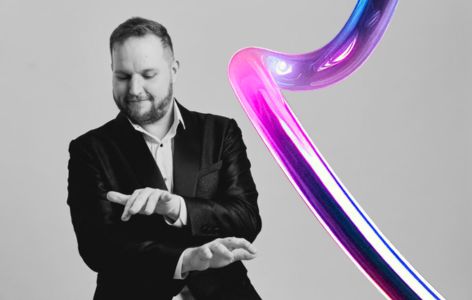
Lukáš Vondráček– piano
Piotr Pyc– English horn
Piotr Nowak– trumpet
National Symphony Orchestra of Polish Radio Katowice (NOSPR)
Marin Alsop– conductor
Although a hand injury caused by excessive practice put an end to Robert Schumann’s promising career as a piano virtuoso, he entered music history as a remarkably prolific composer and a perceptive music critic. The genesis of Schumann’s Piano Concerto is closely linked to his love for the young piano prodigy Clara Wieck, who became his wife a few years later. Rather than dazzling audiences with sheer virtuosity, the concerto captivates with its subtle musical poetry. At its premiere, the work enjoyed extraordinary success and to this day remains a cornerstone of the concerto repertoire worldwide.
Elements of folk music and jazz, combined with a highly individual musical imagination, come together in the work of Aaron Copland, one of the great figures of American classical music. His composition Quiet City (1939) was originally written as incidental music for Irwin Shaw’s play of the same name, telling the story of a Jewish boy who seeks refuge from his hardships by playing the trumpet. After the play failed, Copland reworked the music into a concert piece for English horn, trumpet, and strings. Blues idioms intertwine here with intonations of Jewish synagogue chant, creating a dreamlike soundscape evoking feelings of anxiety and isolation brought on by the city.
In his opera Der Rosenkavalier, German composer Richard Strauss infused his refined late-Romantic musical language with waltz rhythms, using them as a symbol of the elegance and charm of the irretrievably lost world of the 18th century. Strauss’s operatic treatment of Hugo von Hofmannsthal’s plot about the boorish Baron Ochs, who seeks to marry a young and wealthy girl, caused a sensation after its premiere in 1911 and quickly propelled Der Rosenkavalier to the ranks of the most beloved operas of the 20th century. The orchestral suite offers a cross-section of Strauss’s captivating music, transporting listeners to the golden age of Vienna at the turn of the 19th and 20th centuries.